
Tucked into the southeastern corner of the Arabian Peninsula, Oman is the kind of country that quietly defies expectations. It has no skyscraper skyline competing with its neighbors, yet it offers dramatic fjords, towering desert dunes, frankincense-scented souqs, and a turtle-nesting coastline that feels untouched by time. Here are ten fascinating facts that reveal why this ancient seafaring nation is one of the most rewarding places to explore in the Middle East.
1. It Is the Oldest Independent State in the Arab World
Oman holds a remarkable distinction: it is the oldest continuously independent state in the Arab world. Unlike many of its neighbors, it was never formally colonized, and it has been ruled by the Al Said dynasty since 1744. For much of the 19th century, Oman was a genuine maritime empire, controlling territory as far afield as Zanzibar off the coast of East Africa and parts of present-day Pakistan and Iran. This seafaring legacy explains Oman's deep cultural ties to the Swahili coast and the Indian Ocean trade routes. You can dig deeper into this layered past in our country guide, which traces the nation from its empire days to its modern revival.
2. Muscat Is a Capital Where Mountains Meet the Sea
Muscat, Oman's capital and largest city, is unlike almost any other Arab capital. Instead of a forest of glass towers, the city sprawls along the Gulf of Oman beneath jagged, sun-baked mountains, with low-rise white buildings hugging the coastline. Strict building codes preserve traditional Omani architecture, so even modern structures echo the arches, domes, and muted tones of the past. The city is home to the magnificent Sultan Qaboos Grand Mosque, which can hold around 20,000 worshippers and houses one of the world's largest hand-woven carpets. Muscat's old harbor district, Muttrah, with its bustling souq and corniche, remains the cultural heart of the city.
3. Frankincense Made Oman Famous in the Ancient World
Long before oil, Oman's wealth flowed from frankincense, the aromatic resin harvested from Boswellia trees that grow in the southern Dhofar region. In antiquity this fragrant resin was worth its weight in gold, prized across Egypt, Rome, and the Mediterranean for use in temples, perfumes, and medicine. The "Land of Frankincense" around Salalah is now a UNESCO World Heritage Site, preserving ancient trading ports and oasis caravan routes. Even today, the scent of burning frankincense drifts through Omani homes and markets, a living link to a trade that shaped the country's identity for thousands of years.
4. The Geography Ranges From Fjords to Towering Dunes
Oman packs an astonishing variety of landscapes into a single country. In the far north, the Musandam Peninsula juts into the Strait of Hormuz with dramatic cliffs and inlets so striking they are nicknamed the "Norway of Arabia." Inland rise the rugged Al Hajar Mountains, crowned by Jebel Shams, the country's highest peak at around 3,000 meters, overlooking a canyon often called the "Grand Canyon of Arabia." To the south lies the Rub' al Khali, or Empty Quarter, one of the largest continuous sand deserts on Earth. Add a 3,000-kilometer coastline along the Arabian Sea, and you have a geography of remarkable contrasts.
5. Arabic Is Official, but Many Languages Echo Its Trading Past
Arabic is the official language of Oman, and the Omani dialect carries its own distinctive flavor. Yet the country's history as a trading and maritime power left it unusually multilingual. Swahili is widely spoken among Omanis whose families lived in Zanzibar and East Africa, while Balochi reflects deep ties to the coast of present-day Pakistan and Iran. In the remote mountains of Dhofar, ancient South Arabian languages such as Jibbali (Shehri) survive, spoken nowhere else on Earth. English is common in business and tourism, making Oman a genuine linguistic crossroads.
6. Around 5 Million People Call It Home, With a Strikingly Young Population
Oman is home to roughly five million people, a large share of whom are expatriate workers from South Asia and elsewhere. The Omani population skews young, with a median age in the twenties, and most residents are concentrated around Muscat and the fertile coastal plain known as the Batinah. Beyond the cities, communities cluster in mountain villages, desert oases, and fishing towns along the coast. The blend of Arab, African, and South Asian heritage gives Omani society a warm cosmopolitanism that visitors often remark on as one of the country's defining qualities.
7. The Dishdasha and the Khanjar Define National Dress
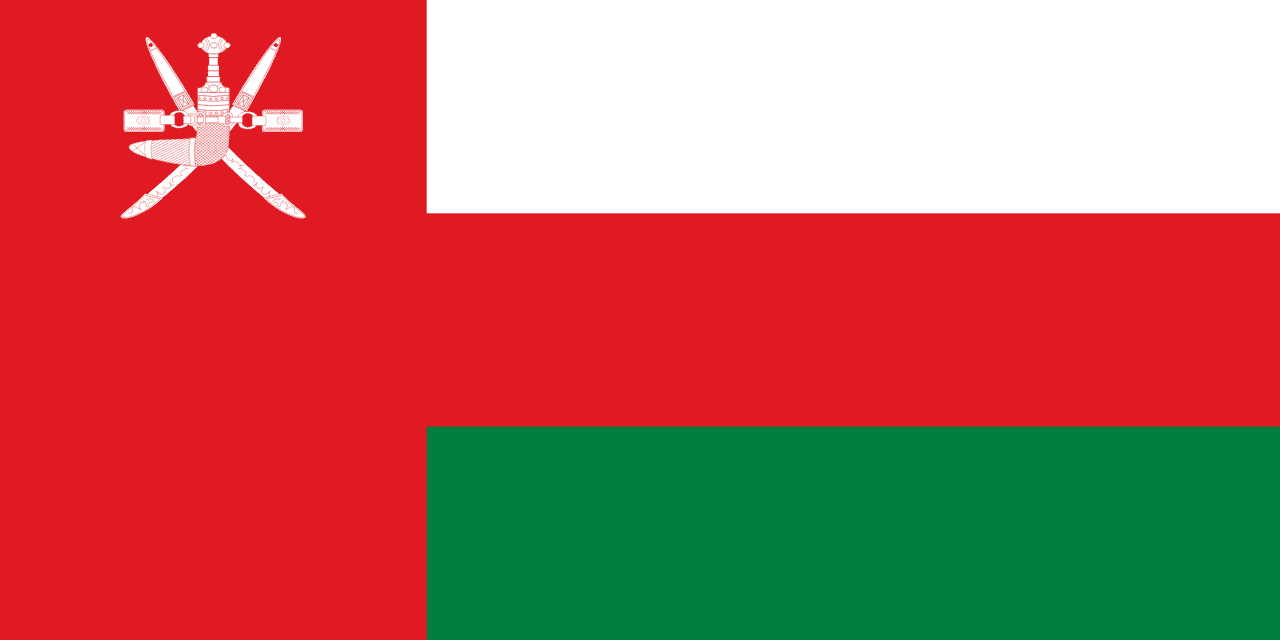
Omani national identity is worn with pride. Men typically wear the dishdasha, a simple ankle-length robe, paired with either an embroidered cap called a kummah or a wrapped turban known as a massar. The most distinctive accessory is the khanjar, a curved ceremonial dagger worn at the waist that has become a national symbol, appearing on the country's flag and emblem. Omani women's dress varies beautifully by region, with vivid colors and intricate embroidery. These traditions are not relics displayed for tourists; they remain part of everyday life and formal occasions across the country. Oman's flag proudly features the khanjar as its centerpiece.
8. Oil Funded a Quiet, Rapid Transformation
Oman's modern economy rests heavily on oil and natural gas, which were discovered and exported only from the late 1960s. The revenue funded one of the most dramatic transformations in the region: when Sultan Qaboos came to power in 1970, the country had just a few kilometers of paved road and almost no modern schools or hospitals. Within a generation it gained highways, universities, and a healthcare system. Today, recognizing its finite reserves, Oman is investing in tourism, logistics, fishing, and mining under a long-term diversification plan, leaning on its strategic position near the world's busiest oil shipping lane.
9. Its Coastline Is a Sanctuary for Sea Turtles and Rare Wildlife
Oman's natural heritage is genuinely world-class. The beaches at Ras al Jinz are among the most important nesting sites on Earth for green sea turtles, where thousands arrive each year to lay their eggs under the cover of darkness. Inland, the mountains and deserts shelter the Arabian oryx, a graceful white antelope that was hunted to extinction in the wild and then successfully reintroduced in Oman. The country's waters host whales, dolphins, and whale sharks, while the seasonal monsoon known as the khareef transforms the Dhofar hills around Salalah into a misty, lush green landscape every summer.
10. The Aflaj Irrigation System Is an Engineering Marvel Centuries Old
One of Oman's most ingenious achievements is the aflaj, an ancient network of gravity-fed water channels that carry water from underground sources and mountain springs across long distances to farms and villages. Some of these channels date back well over a thousand years and are still in use today, fairly distributing precious water among communities according to time-honored systems. Five of them are recognized by UNESCO as a World Heritage Site. The aflaj turned harsh, arid land into productive date palm plantations and oasis towns, and they remain a powerful symbol of how Omanis mastered survival in a demanding environment.
Frequently Asked Questions
What is the capital of Oman?
The capital of Oman is Muscat, a coastal city set between the Gulf of Oman and the rugged Al Hajar Mountains. It is the country's political, commercial, and cultural center, famous for its low-rise traditional architecture, the Sultan Qaboos Grand Mosque, and the historic Muttrah Souq.
What is Oman most famous for?
Oman is best known for frankincense, its dramatic and varied landscapes ranging from fjords to vast deserts, its long maritime and trading history, and its warm hospitality. It is also celebrated for being the oldest independent state in the Arab world and for preserving its traditional culture amid modern development.
Why does Oman turn green in summer?
Each summer, a seasonal monsoon called the khareef sweeps across the southern Dhofar region around Salalah, bringing steady mist, drizzle, and cool air. This transforms the normally arid hills into rolling green meadows with waterfalls, drawing visitors from across the Gulf seeking relief from the desert heat.
Conclusion
Oman rewards the curious traveler and the armchair geographer alike. From its frankincense-rich past and seafaring empire to its turtle-filled beaches, ancient water channels, and mountains that meet the sea, this is a country that balances deep tradition with quiet modernity. These ten facts only begin to capture its character, and the more you learn about Oman, the more this remarkable corner of Arabia invites further exploration.