
Dangling off the southern tip of India like a teardrop in the Indian Ocean, Sri Lanka packs an astonishing amount of variety into an island roughly the size of Ireland. Ancient kingdoms, world-famous tea, leopards and elephants, eight UNESCO World Heritage Sites, and beaches that ring nearly the entire coast all crowd together here. These ten facts go far beyond the textbook to show why this small nation punches so far above its weight.
1. It Has Two Capitals, and Most People Use the Wrong One
Ask anyone to name Sri Lanka's capital and they will almost always say Colombo. They are not entirely right. Colombo is the largest city and commercial heart, but the official administrative and legislative capital is Sri Jayawardenepura Kotte, a satellite city just east of Colombo where the national parliament sits. The mouthful of a name reflects its history as the seat of a 15th-century kingdom. The split happened in the 1980s when the government moved the legislature out of crowded Colombo. To learn more about how this is organized, see our country guide.
2. The Country Has Been Renamed Twice in Modern History
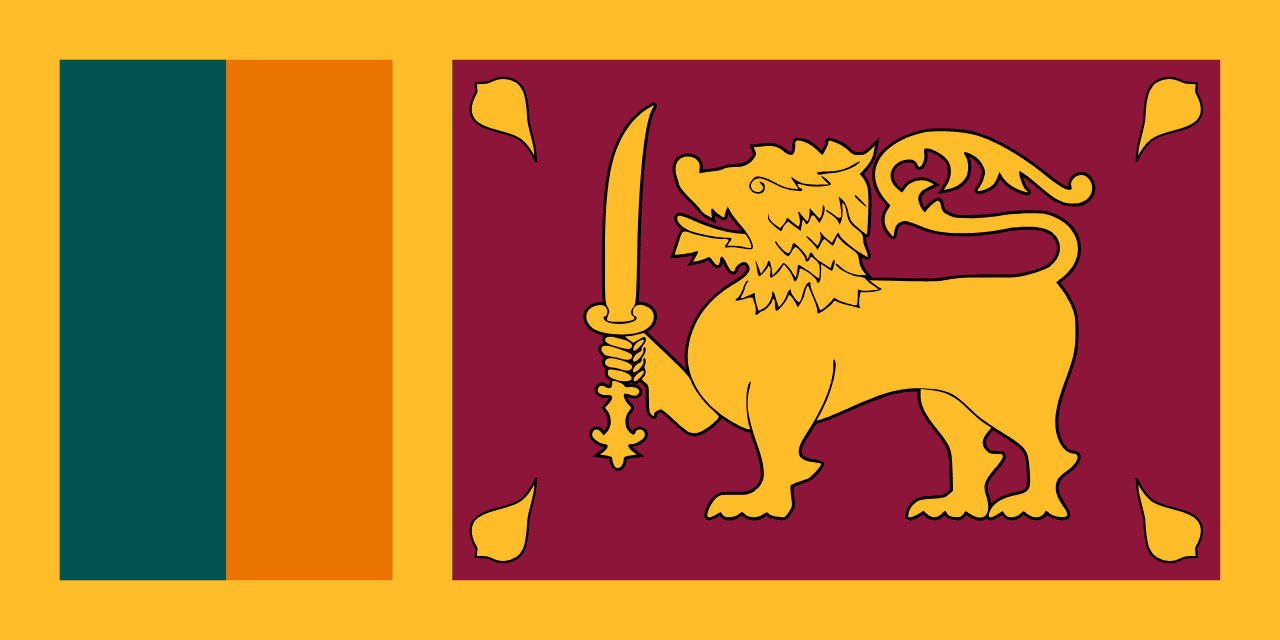
Sri Lanka has worn several names over the centuries. Arab traders called it Serendib, the root of the English word serendipity, meaning a happy accident of discovery. Under British colonial rule it was known as Ceylon, a name still stamped on millions of tea boxes worldwide. The country gained independence in 1948 and finally became the Democratic Socialist Republic of Sri Lanka in 1972, with "Sri Lanka" meaning "resplendent island" in Sanskrit. The lion that dominates the national emblem and the country's flag gives rise to yet another old name, "Sinhala," the land of lions.
3. Ceylon Tea Made the Island Famous
Sri Lanka is one of the world's largest tea exporters, and "Ceylon tea" remains a global byword for quality. The story is one of disaster turned triumph. In the 1860s a fungal blight wiped out the island's thriving coffee plantations, ruining planters overnight. A Scottish entrepreneur and others gambled on tea instead, and the cool, misty central highlands proved perfect for it. Today, neat rows of tea bushes carpet the hills around Nuwara Eliya and Ella, picked largely by hand. The industry employs hundreds of thousands of workers and shapes both the economy and the famous green terraced landscapes that draw photographers from around the world.
4. Adam's Peak Is Sacred to Four Religions at Once
Few mountains in the world are revered by so many faiths. At the summit of Adam's Peak, a 2,243-metre cone in the central highlands, sits a rock formation bearing a large footprint-shaped mark. Buddhists believe it is the footprint of the Buddha, Hindus attribute it to Shiva, Muslims and some Christians link it to Adam from the Genesis story. During pilgrimage season, thousands of pilgrims climb thousands of steps through the night to reach the top by dawn, when the rising sun casts a perfect triangular shadow of the peak onto the clouds below, a sight that leaves first-time climbers speechless.
5. It Holds the World Record for an Ancient Engineered Landscape
Long before modern engineering, Sri Lankan kings built one of history's most sophisticated water-management systems. Beginning more than 2,000 years ago, rulers in the dry northern plains constructed thousands of reservoirs, called tanks, linked by canals to capture monsoon rain and irrigate rice paddies year-round. Some, like the vast Parakrama Samudra, are so large they look like inland seas. The ancient cities of Anuradhapura and Polonnaruwa, both UNESCO World Heritage Sites, grew rich on this hydraulic civilization. The brick stupas at Anuradhapura were once among the tallest structures on Earth, rivalling the pyramids of Egypt in scale.
6. Sigiriya Is a Palace on Top of a Giant Rock
Rising 200 metres straight out of the jungle, the Sigiriya rock fortress is Sri Lanka's most iconic landmark. In the 5th century, King Kashyapa built a royal palace on its flat summit, complete with landscaped water gardens, swimming pools, and frescoes of beautiful women painted on the sheer rock face that still glow with colour today. Visitors climb past a colossal gateway shaped like a lion's paws, the origin of the name Sigiriya, "Lion Rock." The site is often called the eighth wonder of the world for its blend of art, hydraulics, and dramatic setting, and it remains one of the best-preserved examples of ancient urban planning in Asia.
7. It Is One of the Best Places on Earth to See Wild Elephants and Leopards
For its modest size, Sri Lanka is a biodiversity superstar, recognized as one of the world's biological hotspots. Yala National Park has one of the highest densities of leopards anywhere on the planet, while Udawalawe and Minneriya are famous for elephants. Every year during "The Gathering," hundreds of wild Asian elephants congregate around the Minneriya reservoir, the largest such gathering of the species in the world. Offshore, blue whales and sperm whales cruise the waters near Mirissa and Trincomalee, making it one of the rare spots where you can see the planet's largest land and sea animals in a single trip.
8. Cinnamon Originated Here and Once Started Wars
True cinnamon, prized for its delicate sweetness, is native to Sri Lanka, and the island was for centuries the world's main source. The spice was so valuable that it helped lure Portuguese, Dutch, and British colonizers to seize control of the coast in turn. To this day Sri Lanka produces the vast majority of the world's genuine cinnamon. Spice is at the heart of the island's cuisine more broadly: a typical "rice and curry" meal can include a dozen small dishes, from fiery sambols to coconut-rich curries. Don't miss hoppers, bowl-shaped pancakes, or kottu, chopped flatbread stir-fried on a griddle with a rhythmic clatter.
9. Its 22 Million People Speak Two Official Languages
Home to around 22 million people, Sri Lanka is a genuine cultural mosaic. The majority Sinhalese speak Sinhala, while the Tamil minority speak Tamil, and both are official languages, with English widely used as a link language. Religiously, Buddhism predominates, but Hinduism, Islam, and Christianity all have deep roots, and their festivals fill the calendar. This diversity also fed decades of tension and a long civil war that ended in 2009. Today the country is rebuilding and reconciling, and its colorful, overlapping traditions, from Buddhist perahera processions with costumed elephants to vibrant Hindu temples, are a major part of its identity.
10. Sri Lankans Are Cricket-Mad and Once Shocked the World
Cricket is not just a sport in Sri Lanka; it is a national obsession. In 1996 the national team pulled off one of the great upsets in sporting history, winning the Cricket World Cup as underdogs with a revolutionary attacking style that changed how the one-day game is played. Stars like Muttiah Muralitharan, the highest wicket-taker in Test history, became national heroes. On match days, streets empty and televisions blare in every shop. Beyond cricket, traditional sports and games endure, but it is the crack of bat on ball that truly unites this otherwise diverse island.
Frequently Asked Questions
What is the capital of Sri Lanka?
The official administrative capital is Sri Jayawardenepura Kotte, located just outside Colombo, which is the country's largest city and commercial center. Many people mistakenly name Colombo as the capital because it is far better known internationally.
What is Sri Lanka most famous for?
Sri Lanka is best known worldwide for Ceylon tea, its eight UNESCO World Heritage Sites including the Sigiriya rock fortress and ancient cities, abundant wildlife such as elephants and leopards, beautiful tropical beaches, flavorful spice-rich cuisine, and its passionate cricket culture.
Why is Sri Lanka called the "teardrop of India"?
The nickname comes from the island's shape and position. On a map it appears as a small teardrop dangling just off the southeastern coast of India, separated by the narrow Palk Strait. The romantic name has stuck for generations.
Conclusion
From ancient hydraulic cities and sacred peaks to leopard-filled jungles and the smell of fresh cinnamon, Sri Lanka proves that great things really do come in small packages. This resplendent island rewards the curious traveler and the armchair explorer alike. These ten facts are only a starting point, so keep exploring and let Sri Lanka surprise you.