
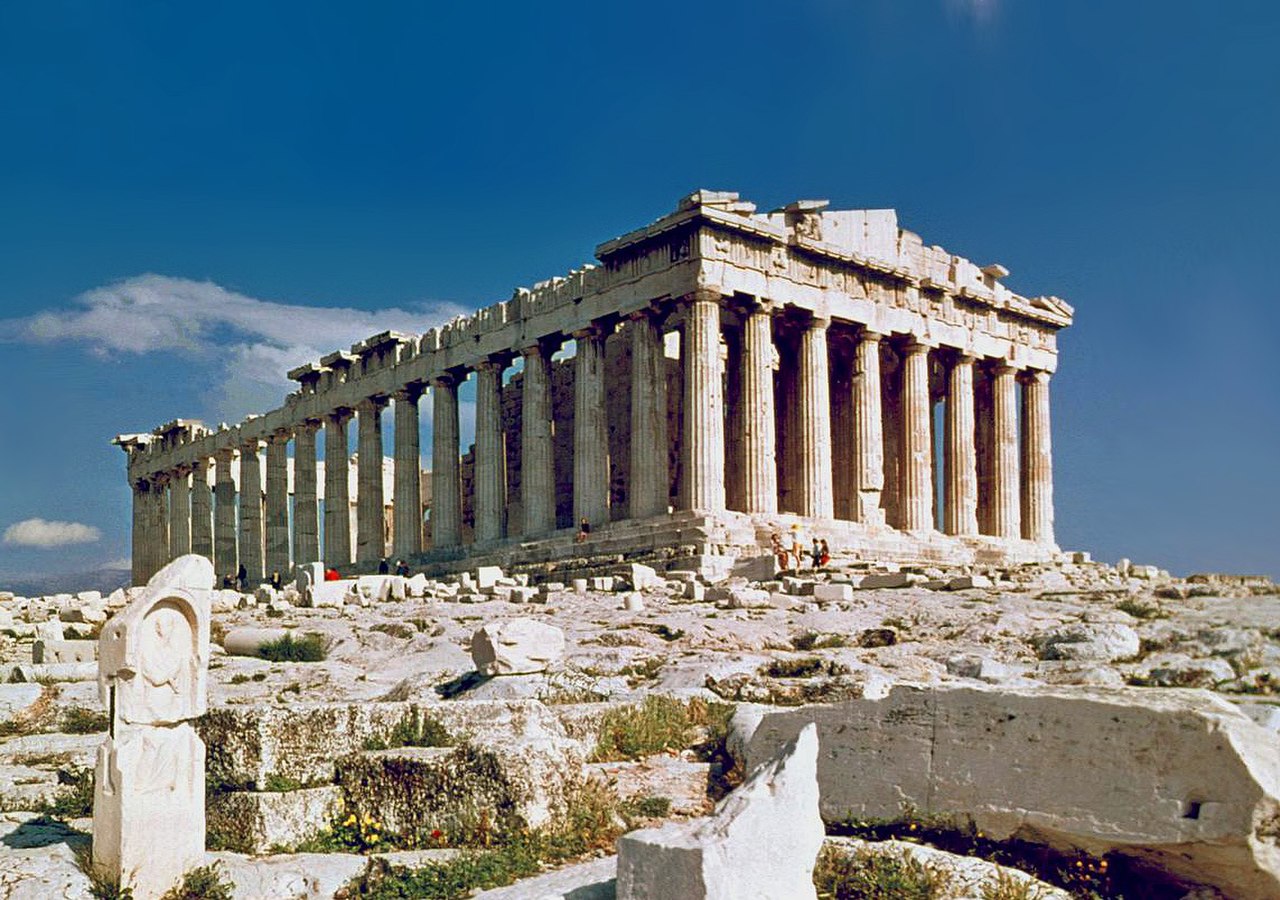
Greek is an official language in two countries: Greece, where it is the sole official language, and Cyprus, where it is co-official with Turkish. It has roughly 13.5 million speakers, which places it around seventy-fifth in the world — and it is one of the six official languages of the European Union all the same. Greek's significance has never been about numbers. It has the longest documented history of any living Indo-European language, running continuously for about 3,400 years.
-
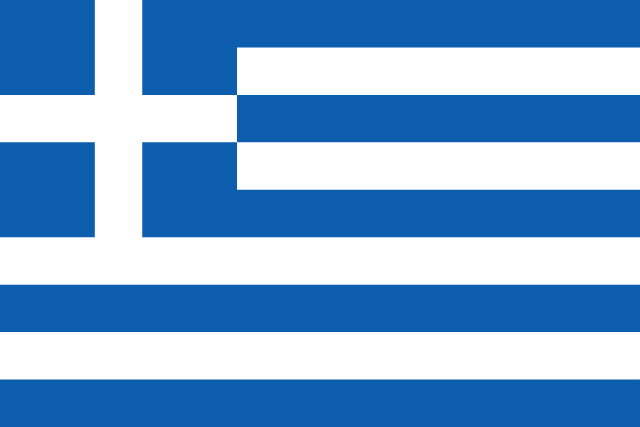 Greece
sole official language
Greece
sole official language
-
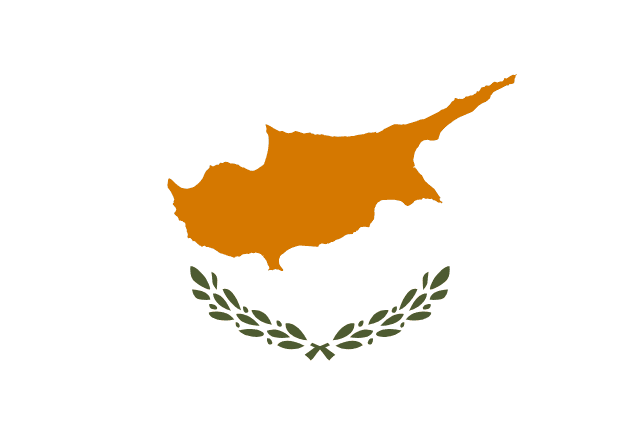 Cyprus
co-official with Turkish
Cyprus
co-official with Turkish
The Longest Written Record of Any Living Language
Greek is attested from around 1400 BCE in Linear B, the syllabic script used for Mycenaean Greek on clay tablets at Knossos, Pylos and Mycenae. Michael Ventris deciphered it in 1952, and the tablets turned out to be inventories — lists of chariot wheels, sheep and personnel rather than literature.
After the Mycenaean collapse there is a gap of several centuries with no writing at all, then the alphabet appears in the eighth century BCE, adapted from Phoenician with the crucial innovation of separate letters for vowels. Homer, Herodotus, Plato and the New Testament follow within a millennium.
No other living language has that span. Chinese has a comparable written history but the modern language is far further from its ancient form; Hebrew has the depth but was revived after centuries as a liturgical rather than spoken language. A modern Greek can make out a good deal of Koine Greek and rather less of Homer, but the line is unbroken.
Greece and Cyprus
Greece's constitution does not explicitly designate an official language, but Greek's status is settled by law and universal practice. Around 99% of the population speaks it, one of the highest linguistic homogeneity rates in Europe, a consequence of the population exchanges with Turkey in 1923 and of consistently assimilationist language policy since.
Cyprus makes Greek and Turkish official under the 1960 constitution. In practice the Republic of Cyprus operates in Greek and the north in Turkish, and around 80% of the island's population is Greek-speaking.
Cypriot Greek is substantially different from the Athenian standard — different enough that Greeks often struggle with it. It preserves consonants standard Greek lost, has distinct vocabulary and an older verb system, and Cypriots typically switch to standard Greek when speaking to mainlanders.
The Minority Communities
Greek is a recognised minority language in Albania, where the Greek community in the south around Gjirokastër and Sarandë has schooling in Greek, and in Italy, where two enclaves speak Griko, a Greek variety in Calabria and Apulia that descends either from ancient Magna Graecia colonies or from Byzantine settlement.
Turkey's Greek community, once several hundred thousand in Istanbul alone, is now numbered in the low thousands after the 1955 pogrom and successive waves of departure. The Ecumenical Patriarchate remains in Istanbul and operates in Greek.
Ukraine has a Greek minority in the Mariupol region, descended from settlers moved from Crimea by Catherine the Great in 1778, speaking Rumeíka. Georgia, Armenia, Russia and Kazakhstan all have Pontic Greek communities from the same eastern Black Sea diaspora.
Pontic and Tsakonian
Two Greek varieties are distinct enough to count as separate languages. Pontic Greek, from the southern Black Sea coast, was carried into Greece, Russia and Georgia by refugees after 1922 and preserves features lost in the standard. It is classified as endangered.
Tsakonian is the more remarkable case. Spoken in a small area of the eastern Peloponnese, it descends not from the Attic-based Koine that produced all other Greek varieties but from ancient Doric — the dialect of Sparta. It is the only surviving descendant of Doric Greek.
Tsakonian is not mutually intelligible with standard Greek and has a few thousand elderly speakers. UNESCO lists it as critically endangered, and revival efforts are underway on a small scale.
The Language War
For most of the nineteenth and twentieth centuries, Greece had two written languages in official competition. Katharevousa was an artificial purified form, created after independence to strip out Turkish and Italian borrowings and restore ancient vocabulary and grammar. Demotic was the language people actually spoke.
The state, the courts, the universities, the press and the church used Katharevousa; literature and daily life used Demotic. The conflict was not academic — riots over a Demotic translation of the New Testament in Athens in November 1901 left several people dead, and the government fell.
Demotic won in 1976, when the post-junta government made it the language of education and administration. Katharevousa survives in legal formulae, ecclesiastical usage and a layer of vocabulary that has been absorbed into the modern standard.
The Alphabet That Started the Others
The Greek alphabet, adapted from Phoenician around the ninth or eighth century BCE, was the first writing system to represent vowels with their own letters. Earlier alphabets recorded consonants and left the reader to supply the rest.
Its descendants include the Latin alphabet, by way of Etruscan, and the Cyrillic alphabet, devised in the ninth century for Slavic languages by missionaries working from Greek. Between them those two scripts cover most of the world's written material.
Modern Greek still uses 24 letters. The polytonic system of three accents and two breathing marks, inherited from ancient scholarship, was abolished by law in 1982 and replaced with a single stress accent, over the objections of a number of writers.
Greek Is Half of Scientific English
Greek supplies the vocabulary of almost every technical field in English and most European languages. Biology, physics, chemistry, medicine, mathematics, politics, philosophy, technology, economics, psychology, geography — every one of those words is Greek, and so are most of the terms inside them.
Medicine is the densest case: cardiology, neurology, pathology, diagnosis, symptom, therapy, anatomy, epidemic and thousands more. New coinages still reach for Greek roots first, which is why a technology invented in California gets a name assembled from morphemes last spoken natively three thousand kilometres away.
Estimates of the Greek-derived share of English vocabulary run around 5% overall and far higher in scientific registers. A Greek speaker encountering English technical vocabulary has an advantage that is unavailable in the other direction, since the English words are often built from Greek roots in combinations no Greek would use.
An EU Language With 13 Million Speakers
Greek became an official language of the European Communities when Greece joined in 1981, and Cyprus's accession in 2004 confirmed it. That gives Greek full translation and interpretation rights across every EU institution, on the same footing as German or French.
The EU's rule is that each member state nominates one official language, regardless of size, which is why Maltese with under half a million speakers and Irish with far fewer daily users hold the same status. Greek sits in the middle of that range rather than at the small end.
The practical effect is a substantial permanent demand for Greek translators and a body of EU legislation published in Greek that constitutes one of the largest bodies of modern technical prose in the language.
The Church Kept an Older Greek Alive
The Greek Orthodox liturgy is conducted in Koine Greek, the common dialect of the Hellenistic world in which the New Testament was written around the first century. It has not been modernised.
The result is that millions of Greek speakers hear a two-thousand-year-old form of their language weekly and can follow a good deal of it. Vocabulary and formulaic phrases from the liturgy circulate in ordinary speech, and the continuity is one reason modern Greek retained so much ancient vocabulary through periods when the spoken language changed considerably.
Koine spread far beyond Greece in the first place because of Alexander's conquests, becoming the administrative and commercial language of the eastern Mediterranean and Egypt for centuries. The Septuagint translation of the Hebrew Bible was made in Koine in Alexandria, which is how a Greek dialect became the language of the earliest Christian texts.
The Diaspora
Somewhere between three and five million people of Greek descent live outside Greece and Cyprus, the product of emigration waves after 1890, after the 1922 catastrophe, and after the Second World War and the civil war.
The United States and Australia have the largest communities. Melbourne is frequently described as one of the largest Greek-speaking cities outside Greece, with Greek-language schools, newspapers and church infrastructure, and Greek is among the most spoken languages at home in Australia.
Germany, Canada, the United Kingdom, South Africa, Brazil and Argentina all have substantial populations. Language retention beyond the second generation is patchy, and Greek governments and the church have both invested heavily in supplementary schooling abroad.
Learning Modern Greek
The US Foreign Service Institute places Greek in Category III at around 1,100 hours for English speakers, alongside Russian, Hindi and Turkish. It is harder than the Romance languages and easier than Arabic or Chinese.
The alphabet takes days. The grammar takes longer: four cases, three genders, a verb system distinguishing perfective and imperfective aspect in every tense, and stress that is phonemic and marked but that moves in ways learners find unpredictable.
Ancient Greek is a different proposition and is not a route into the modern language. It has five cases, a dual number, an optative mood and a pitch accent, and the pronunciation taught in classics departments is a reconstruction that modern Greeks find unrecognisable. For the wider European picture, see the count of countries in Europe and the position of Italian, the other Mediterranean language with far more prestige than speakers.