
Germany has nine public holidays observed nationwide: New Year's Day, Good Friday, Easter Monday, Labour Day on 1 May, Ascension Day, Whit Monday, German Unity Day on 3 October, and Christmas Day and Boxing Day on 25 and 26 December. Individual federal states add several more, so the actual number of days off ranges from nine in much of the north to thirteen in parts of Bavaria.
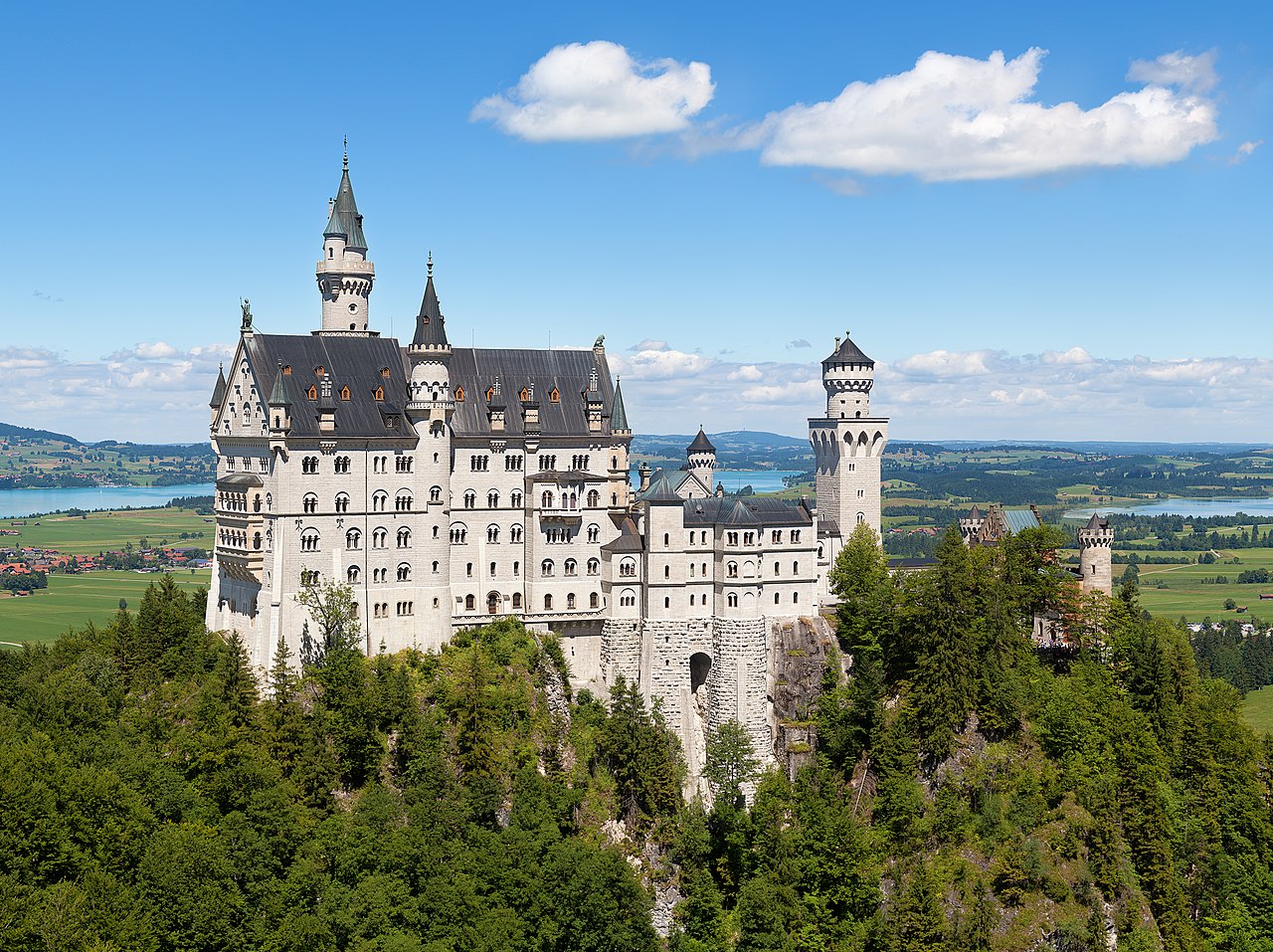
The nine holidays every state observes
Only one German public holiday is set by federal law. The Unity Day Act designates 3 October, and everything else is determined at state level — the other eight are nationwide simply because all sixteen states have independently legislated for them.
- Neujahr — 1 January, New Year's Day
- Karfreitag — Good Friday, movable
- Ostermontag — Easter Monday, movable
- Tag der Arbeit — 1 May, Labour Day
- Christi Himmelfahrt — Ascension Day, movable, always a Thursday
- Pfingstmontag — Whit Monday, movable
- Tag der Deutschen Einheit — 3 October, German Unity Day
- Erster Weihnachtstag — 25 December
- Zweiter Weihnachtstag — 26 December
Six of the nine are Christian in origin, which reflects the historical calendar rather than current religious practice — a majority of Germans now report no religious affiliation, but the holidays are entrenched in law and no serious effort has been made to remove them.
Two dates that many visitors assume are holidays are not. Christmas Eve and New Year's Eve are ordinary working days in law, though most businesses close early by collective agreement, and shops typically shut around midday on 24 December.
German Unity Day and the date that was chosen instead
3 October marks the day in 1990 when the German Democratic Republic acceded to the Federal Republic, formally completing reunification. It replaced 17 June, which West Germany had observed since 1954 in memory of the 1953 East German uprising.
The choice of date was practical rather than symbolic, and this is often misunderstood. The obvious candidate was 9 November — the night the Berlin Wall opened in 1989. It was rejected because the same date carries the 1938 Kristallnacht pogrom, and, further back, the 1918 proclamation of the republic and the 1923 Beer Hall Putsch. Making it a day of celebration was judged impossible.
Unity Day is a working holiday rather than a religious one, so unlike the "silent" holidays it carries no restrictions on entertainment. The main official ceremony rotates annually among the state capitals, hosted by whichever state currently holds the presidency of the Bundesrat. Our guide to Berlin covers the city where much of that history took place.
The state-level holidays that change the totals
Beyond the nine, states add holidays according to their religious history, which is why the number of days off varies by where you live.
- Heilige Drei Könige (Epiphany, 6 January) — Bavaria, Baden-Württemberg, Saxony-Anhalt
- Internationaler Frauentag (8 March) — Berlin and Mecklenburg-Vorpommern, both recent additions
- Fronleichnam (Corpus Christi, movable) — Bavaria, Baden-Württemberg, Hesse, North Rhine-Westphalia, Rhineland-Palatinate, Saarland, and parts of Saxony and Thuringia
- Mariä Himmelfahrt (Assumption, 15 August) — Saarland and predominantly Catholic municipalities of Bavaria
- Reformationstag (31 October) — all five eastern states plus Schleswig-Holstein, Hamburg, Lower Saxony and Bremen
- Allerheiligen (All Saints, 1 November) — Bavaria, Baden-Württemberg, North Rhine-Westphalia, Rhineland-Palatinate, Saarland
- Buß- und Bettag (Day of Repentance, movable) — Saxony only
- Weltkindertag (20 September) — Thuringia
Reformation Day was granted permanently to the four northern states in 2018, after they observed it as a one-off for the Reformation's 500th anniversary in 2017 and noticed they had fewer holidays than the south. Berlin added International Women's Day in 2019 for the same reason.
Why Bavaria comes out on top
Bavaria observes the most public holidays of any state — thirteen in the municipalities that qualify for Assumption Day, twelve elsewhere — and the reason is the Reformation.
Bavaria remained solidly Catholic while much of northern and eastern Germany turned Protestant, and the Catholic calendar simply contains more feast days. Corpus Christi, Assumption, All Saints and Epiphany are all Catholic observances that Protestant regions dropped. The map of German public holidays is essentially a map of the sixteenth-century confessional divide, still visible five centuries later.
The Assumption Day rule is the most unusual in German law. Rather than applying to the whole state, it applies only in Bavarian municipalities where Catholics outnumber Protestants, determined by census data — so roughly 1,700 of Bavaria's municipalities observe it and several hundred do not. Neighbouring towns can genuinely differ on whether 15 August is a working day.
Augsburg goes further still and is the only German city with a holiday of its own: the Augsburger Hohes Friedensfest on 8 August, commemorating the restoration of Protestant religious freedom in the city in 1650.
Movable feasts and how their dates are fixed
Five of the nine national holidays move each year, all tied to Easter, which follows the Western Christian calculation: the first Sunday after the first full moon on or after the vernal equinox, placing it between 22 March and 25 April.
Everything else follows mechanically:
- Good Friday — two days before Easter Sunday
- Easter Monday — the day after Easter Sunday
- Ascension Day — 39 days after Easter Sunday, always a Thursday
- Whit Monday — 50 days after Easter Sunday
- Corpus Christi — 60 days after Easter Sunday, always a Thursday
Because Ascension and Corpus Christi always land on Thursday, taking the Friday as leave produces a four-day weekend — the practice known as Brückentag, a "bridge day", and one of the most heavily booked leave days in the German calendar. Ascension Day doubles as Father's Day, or Vatertag, marked in many regions by groups of men hauling handcarts of beer through the countryside.
There is no substitution rule in Germany. If a holiday falls on a Saturday or Sunday it is simply lost, unlike in the United Kingdom where a weekday is granted in lieu. Some years therefore contain noticeably fewer days off than others.
Germany's holiday count compared with its neighbours
Germany sits mid-range in Europe. Austria has thirteen nationwide public holidays, several more than Germany's nine, including Epiphany, Corpus Christi, Assumption, All Saints and Immaculate Conception — the Catholic calendar again, applied to a whole country rather than a single state.
Switzerland is the closest structural parallel: only 1 August, the National Day, is federally mandated, and the cantons decide the rest, producing a range of roughly eight to fifteen depending on where you are. France has eleven; the United Kingdom has eight or nine depending on the constituent nation, among the lowest counts in Europe.
Statutory holidays are only part of the picture, though. Germany's minimum statutory paid annual leave is 20 days on a five-day week, and collective agreements commonly raise this to 25 to 30 days. Combining leave and public holidays, German workers do well by international comparison even where the holiday count alone looks unremarkable.
What a Feiertag actually means in practice
The everyday effect of a German public holiday is more far-reaching than in most countries, because it interacts with shop closing law.
Shop opening hours are regulated at state level, and almost all retail is closed on Sundays and public holidays. Supermarkets, department stores and most shops shut completely. The reliable exceptions are bakeries for limited morning hours, petrol stations, pharmacies on a rota, and shops inside major railway stations and airports — which is why station supermarkets are unusually busy on holidays.
Some holidays are additionally designated stille Feiertage, or silent days, with legal restrictions on public dancing and entertainment. Good Friday is the strictest: clubs close and cinemas may be restricted from showing certain films, with the rules varying by state and Bavaria applying them most rigorously. The bans have been repeatedly challenged in court, and the Federal Constitutional Court ruled in 2016 that Bavaria's blanket prohibition needed to allow for exemptions.
Working on a holiday, and who has to
The legal basis for all of this is the Working Hours Act, which prohibits employment on Sundays and public holidays as a general rule and then lists the exceptions.
Those exceptions are extensive, because a country cannot simply stop. Hospitals, emergency services, fire brigades, police, public transport, hospitality, broadcasting, energy supply and continuous industrial processes such as steelmaking and chemical production all operate normally. Workers in these sectors are entitled to a compensatory rest day — within eight weeks for a Sunday, and within a longer window for a public holiday.
Pay is a common misunderstanding. German law does not require a holiday bonus for those who work. Premiums of 100% or more for public holiday work are widespread, but they come from collective bargaining agreements or individual contracts rather than statute. What the law does guarantee is that employees who would ordinarily have worked that day receive their normal pay for the holiday itself — a holiday does not mean a smaller paycheque.
The rules are enforced seriously. State occupational safety authorities inspect compliance, and unlawful holiday operation carries fines. This is one reason the closures are so complete: a supermarket cannot simply decide to open.
The practical advice for visitors is straightforward: check the calendar for the specific state you will be in, buy groceries the day before, and expect public transport to run to a Sunday timetable. For more on the country behind these traditions, see our Germany country guide, or read about how Oktoberfest came to define the Bavarian calendar in a way no statutory holiday does.