
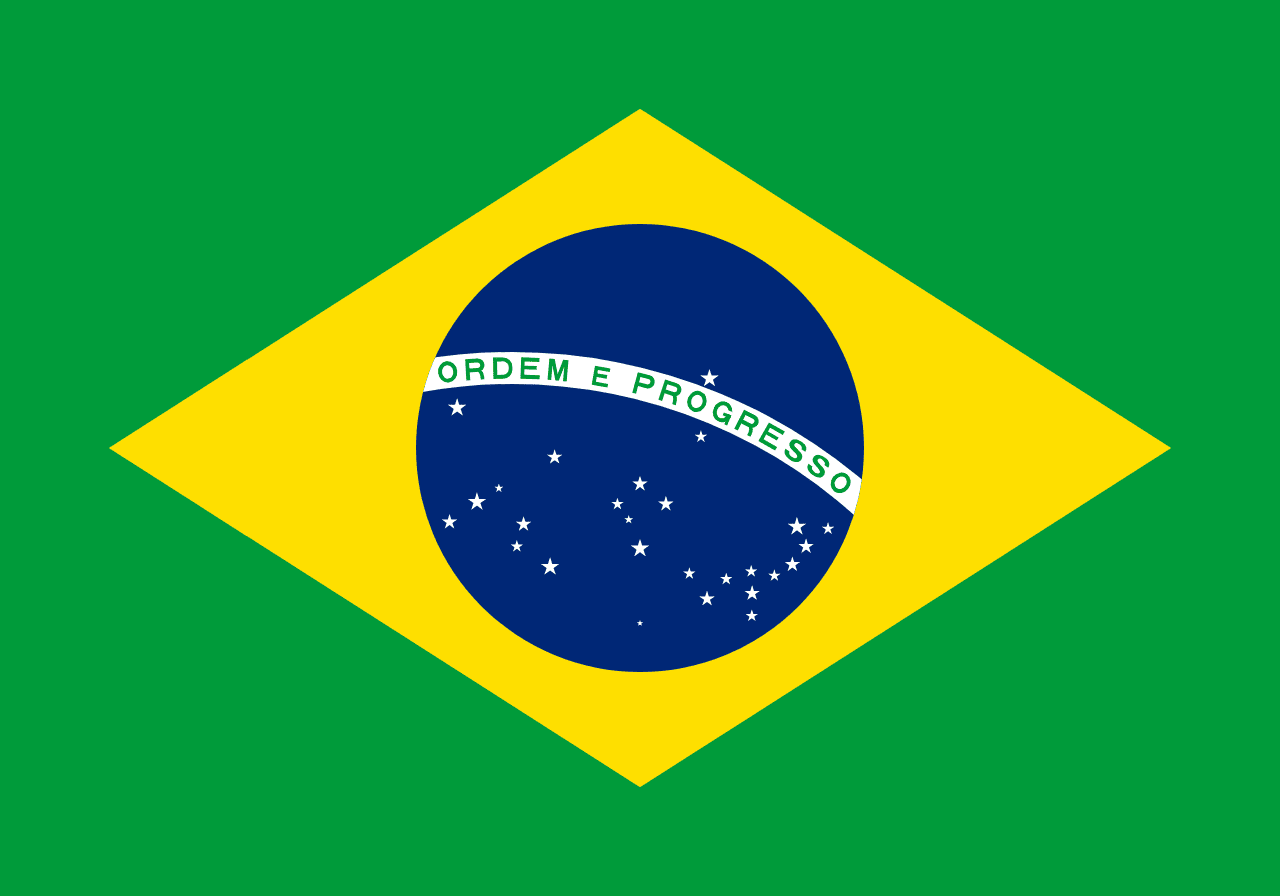
Brazil is a country of staggering scale and contradiction: it holds the lungs of the planet inside its borders, dances to a soundtrack that the whole world hums, and somehow fits Portuguese, Indigenous, African, and immigrant cultures into one vast, sun-drenched mosaic. It is the only nation that spans both the equator and the Tropic of Capricorn, and the only South American country where you order your cafezinho in Portuguese rather than Spanish. From the Amazon's emerald canopy to the floodlit beaches of Rio, here are ten facts that reveal why Brazil is endlessly fascinating.
1. It Is the Fifth-Largest Country on Earth
Brazil covers roughly 8.5 million square kilometers, making it the fifth-largest country in the world by area and by far the biggest in South America. It shares a land border with every country on the continent except Chile and Ecuador, a remarkable ten neighbors in total. Its sheer size means the country sprawls across four time zones and a dizzying range of environments: tropical wetlands, semi-arid scrubland, subtropical highlands, and thousands of kilometers of Atlantic coastline. You could fit the entire continental United States inside Brazil with room to spare, which helps explain why a domestic flight from the northern Amazon to the southern pampas can feel like crossing several different countries.
2. Brasília Was Built From Scratch in the Wilderness
Unlike most capitals that grow organically over centuries, Brasília was conjured out of empty highland savanna in just 41 months, opening in 1960. President Juscelino Kubitschek wanted to pull the country's center of gravity inland from the crowded coast, and architect Oscar Niemeyer and urban planner Lúcio Costa delivered a city laid out in the shape of an airplane (or a bird, depending on whom you ask). Its sweeping modernist concrete curves were so distinctive that the entire city was declared a UNESCO World Heritage Site in 1987, one of the few twentieth-century creations to earn that honor. Today it is home to the government, embassies, and around three million people in the wider metro area.
3. Portuguese Makes Brazil Linguistically Unique
Brazil is the largest Portuguese-speaking nation on the planet, with more speakers than Portugal and all the other Lusophone countries combined. It is the legacy of Portuguese colonization, and it sets Brazil apart from its Spanish-speaking neighbors across the continent. Yet Brazilian Portuguese has its own flavor, full of warmth, slang, and rhythm, and it absorbed words from Indigenous Tupi languages (think abacaxi for pineapple) and from the African languages brought during the era of slavery. To see how the nation's identity is stitched into its symbols, take a look at our flag deep dive.
4. It Holds the Largest Rainforest on Earth
About 60 percent of the Amazon rainforest lies within Brazil, an ecosystem so vast it is often called the lungs of the planet. The Amazon River that runs through it discharges more water than the next seven largest rivers combined, pouring so much freshwater into the Atlantic that the ocean is noticeably less salty for over a hundred kilometers offshore. The forest is the most biodiverse place on Earth, sheltering an estimated 10 percent of all known species. Scientists are still cataloguing it; new plants, insects, fish, and even mammals are discovered there almost every year, a constant reminder of how much remains unknown.
5. Carnival Is the World's Biggest Party
Each year before Lent, Brazil erupts into Carnival, and Rio de Janeiro's version is the most famous celebration on Earth. Samba schools spend the entire year designing costumes and floats, then compete in the purpose-built Sambadrome before judges and roaring crowds. Millions of people fill the streets at free block parties called blocos, dancing to samba and axé until dawn. But Carnival is not just Rio: Salvador's street party is even larger by sheer numbers, and Recife and Olinda host their own distinct traditions with giant puppets and frevo music. It is a national release valve of color, rhythm, and joy.
6. Football Is Practically a Religion
No country is more synonymous with football than Brazil. It is the only nation to have won the men's FIFA World Cup five times, more than anyone else, and it produced legends like Pelé, Garrincha, Ronaldo, and Ronaldinho. The famous yellow jersey, the Seleção Canarinho, is one of the most recognizable in all of sport. Football here is played everywhere: on beaches, in dusty backstreets, and on improvised pitches in every town. The flowing, improvisational style Brazilians call jogo bonito, the beautiful game, has shaped how the sport is played and admired across the entire world.
7. A Melting Pot of Peoples
With more than 213 million people, Brazil is the most populous country in South America and the seventh-most populous in the world. Its population is one of the most ethnically mixed anywhere, blending Indigenous peoples, descendants of Portuguese colonists, the largest population of African descent outside Africa, and waves of immigrants from Italy, Germany, Japan, and the Middle East. São Paulo, the largest city, is home to the biggest Japanese community outside Japan and to a Lebanese-descended population some estimate rivals Lebanon itself. This fusion shaped the food, music, and religion of modern Brazil. Learn more in our full country guide.
8. Feijoada and a Cuisine Built on Fusion
Brazilian food reflects its blended heritage. The national dish, feijoada, is a hearty black bean stew slow-cooked with pork, traditionally served with rice, collard greens, orange slices, and toasted cassava flour. From the southern grasslands comes churrasco, the legendary all-you-can-eat barbecue where waiters carve skewered meats tableside. The Amazon gifts the world açaí, a deep-purple berry that became a global health craze, while street vendors everywhere sell pão de queijo, addictive little cheese breads made with cassava starch. Wash it all down with a caipirinha, the country's signature cocktail of cachaça, lime, and sugar.
9. Wildlife That Exists Nowhere Else
Beyond the Amazon, Brazil holds the Pantanal, the world's largest tropical wetland and arguably the best place on the continent to actually see jaguars in the wild. The country's animals read like a wish list for any naturalist: pink river dolphins gliding through flooded forests, capybaras (the planet's largest rodents) lounging by riverbanks, brilliantly colored toucans and macaws, sloths, anteaters, and giant otters. Brazil ranks among the most biodiverse nations on Earth, harboring thousands of species of fish, amphibians, and birds found within no other country's borders. Protecting these habitats is one of the great environmental challenges of our age.
10. The Statue That Watches Over Rio
Standing 30 meters tall atop the 700-meter Corcovado mountain, Christ the Redeemer has gazed over Rio de Janeiro since 1931, arms outstretched above the city. Built from reinforced concrete and clad in thousands of triangular soapstone tiles, it was voted one of the New Seven Wonders of the World in 2007. The statue is regularly struck by lightning and occasionally needs repairs to its fingers and head. From its base, visitors take in one of the planet's most spectacular urban panoramas: Sugarloaf Mountain, Copacabana and Ipanema beaches, and Guanabara Bay all spread out below in a single sweeping view.
Frequently Asked Questions
What is the capital of Brazil?
The capital is Brasília, a planned city inaugurated in 1960 in the country's central highlands. It replaced Rio de Janeiro as the seat of government and was designed by Oscar Niemeyer and Lúcio Costa in a famous airplane-shaped layout. Despite being the capital, it is not the largest city; that title belongs to São Paulo.
What is Brazil most famous for?
Brazil is best known for the Amazon rainforest, its five-time World Cup-winning football teams, the dazzling Carnival celebrations in Rio de Janeiro, samba music, and the iconic Christ the Redeemer statue. It is also celebrated for its beaches, its biodiversity, and its warm, festive culture.
Is it true the Amazon River turns the ocean less salty?
Yes. The Amazon discharges such an enormous volume of freshwater into the Atlantic Ocean that it noticeably dilutes the salt water for well over a hundred kilometers out to sea. Early explorers reportedly drank fresh water from the ocean before they could even see land.
Conclusion
Brazil rewards the curious like few other places. It is a country where a single nation contains the world's greatest forest, its biggest carnival, its most decorated football tradition, and a cuisine and culture forged from continents' worth of influences. These ten facts barely scratch the surface of a land this vast and varied, but they hint at why Brazil holds such an outsized place in the global imagination. Keep exploring, and Brazil will keep surprising you.