
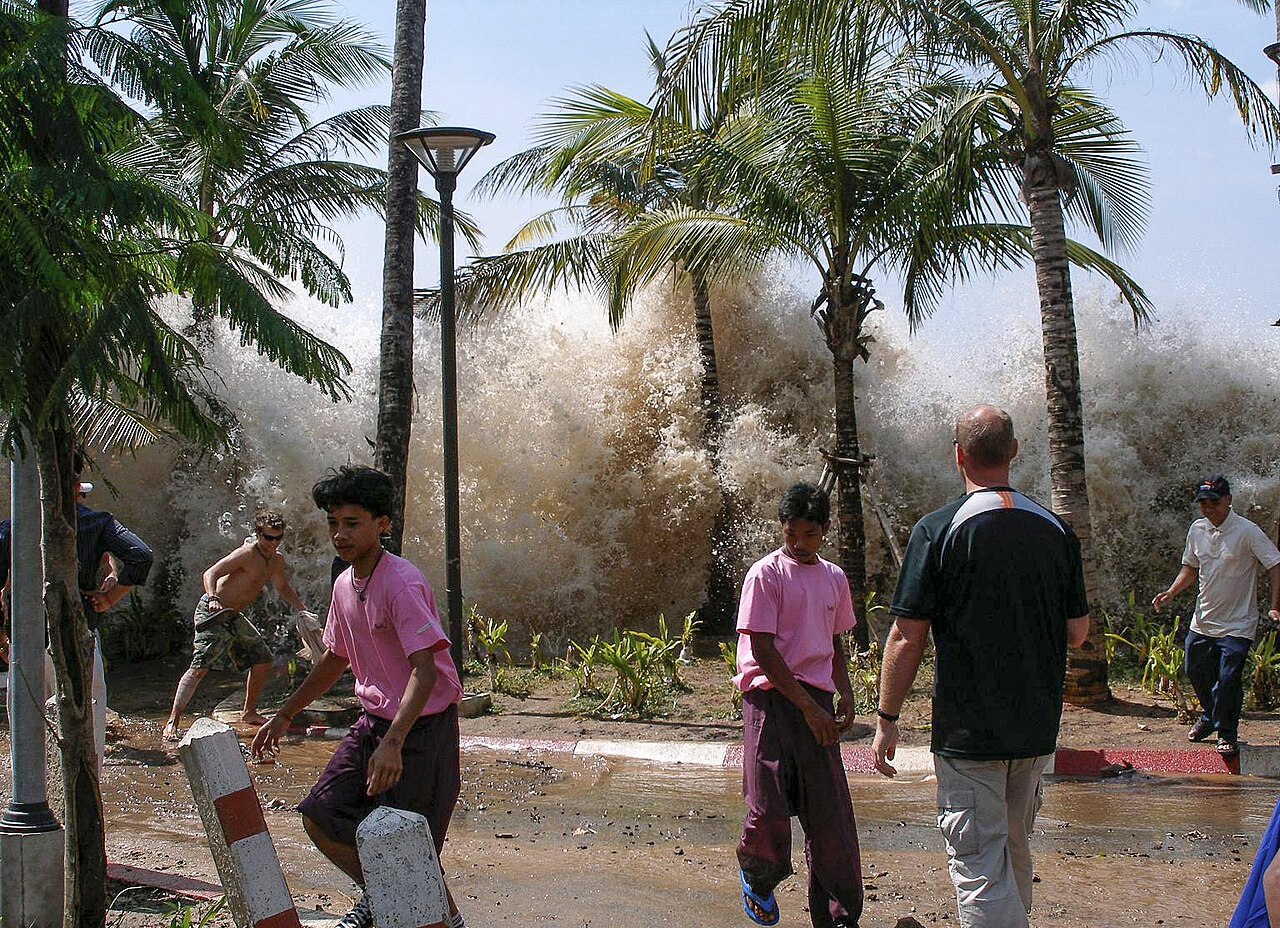
Introduction to Tsunamis
The word "tsunami" comes from Japanese, meaning "harbor wave" (津波). Unlike ordinary ocean waves caused by wind, tsunamis are generated by sudden, large-scale displacement of water—typically from underwater earthquakes, volcanic eruptions, or landslides. These waves can travel across entire ocean basins at speeds exceeding 500 mph (800 km/h) and devastate coastlines thousands of miles from their origin.
How Tsunamis Form
Tsunamis begin when a massive volume of water is suddenly displaced. The most common cause is underwater earthquakes at subduction zones, where one tectonic plate slides beneath another. When the overlying plate suddenly snaps upward after being bent down, it displaces billions of tons of water, creating a series of waves that radiate outward in all directions.
Primary Causes of Tsunamis
- Underwater Earthquakes: Account for approximately 80% of all tsunamis. The earthquake must be at least magnitude 7.0 and cause vertical displacement of the seafloor.
- Submarine Landslides: Underwater landslides can displace enormous volumes of water. These can be triggered by earthquakes or occur independently.
- Volcanic Eruptions: Explosive eruptions or caldera collapses can generate devastating tsunamis. The 1883 Krakatoa eruption created waves over 100 feet tall.
- Meteorite Impacts: Though extremely rare, large asteroid impacts in the ocean would generate massive tsunamis.
Tsunami Physics and Behavior
In the deep ocean, tsunami waves are barely noticeable—often only 1-3 feet (30-60 cm) high with wavelengths of 100-200 miles. Ships at sea rarely notice them passing beneath. However, their behavior changes dramatically as they approach shore.
Wave Speed and Wavelength
Tsunami speed depends on water depth: Speed = √(gravity × depth). In the deep Pacific (average depth 14,000 feet), tsunamis travel at about 500 mph—as fast as a jet airplane. As the wave enters shallow water, it slows dramatically to 20-30 mph but maintains its enormous energy.
Wave Amplification
As a tsunami approaches shore and water becomes shallower, the wave undergoes "shoaling." The front of the wave slows while the back continues at higher speed, causing the wave to compress and grow taller. A 3-foot wave in deep water can become a 30-100 foot wall of water at the coast.
Warning Signs of an Approaching Tsunami
Nature often provides warning signs before a tsunami arrives:
- Unusual Ocean Behavior: The ocean may recede dramatically from the shore, exposing the seafloor—sometimes for miles. This is the wave's trough arriving before the crest.
- Roaring Sound: An approaching tsunami often sounds like a freight train or continuous thunder.
- Ground Shaking: If you feel a strong earthquake near the coast, a tsunami may follow within minutes.
- Animal Behavior: Animals often flee to higher ground before tsunamis, sensing vibrations humans cannot detect.
Historic Tsunamis
2004 Indian Ocean Tsunami
On December 26, 2004, a magnitude 9.1-9.3 earthquake off Sumatra generated the deadliest tsunami in recorded history. Waves up to 100 feet struck coastlines from Indonesia to Africa, killing approximately 230,000 people across 14 countries. The disaster led to the creation of the Indian Ocean Tsunami Warning System.
2011 Tōhoku Tsunami (Japan)
A magnitude 9.1 earthquake triggered waves up to 133 feet that devastated Japan's northeastern coast. The disaster killed nearly 20,000 people and caused the Fukushima nuclear accident. Japan's advanced warning system saved countless lives, but some waves arrived in just 10 minutes.
1755 Lisbon Tsunami
Following a massive earthquake, tsunamis up to 20 feet swept through Lisbon's harbor, killing thousands of survivors who had fled to the waterfront. This disaster sparked early scientific study of earthquakes and tsunamis.
Tsunami Warning Systems
Modern tsunami warning systems use networks of seismographs to detect earthquakes and deep-ocean pressure sensors (DART buoys) to confirm tsunami generation. The Pacific Tsunami Warning Center can issue alerts within minutes of a major earthquake, potentially giving coastal communities hours to evacuate.
Limitations of Warning Systems
Warning systems work well for distant tsunamis but provide little help for local events. When an earthquake occurs close to shore, the tsunami may arrive in 10-30 minutes—before any official warning. In these cases, natural warning signs and education are crucial.
Tsunami Safety and Preparation
- Know your evacuation routes to high ground or inland areas
- If you feel strong shaking near the coast, move to high ground immediately without waiting for official warnings
- If you see the ocean recede unusually, run inland—you may have only minutes
- Never go to the beach to watch a tsunami—even "small" tsunamis are extremely dangerous
- A tsunami is not a single wave but a series; stay away from the coast for hours after the first wave
Conclusion
Tsunamis represent one of Earth's most powerful and destructive natural phenomena. Understanding their causes, recognizing warning signs, and knowing evacuation procedures can mean the difference between life and death. While we cannot prevent tsunamis, improved warning systems and public education have significantly reduced their death toll in recent decades.